Every Leak Repair in Tampa, FL job begins with a pinpoint diagnosis rather than guesswork, and ends with a five-year workmanship warranty.
Tampa sits in one of the most plumbing-stressful geological zones in Florida. The limestone karst bedrock that defines Hillsborough, Pasco, and Hernando counties produces continuous slow ground movement — cracking rigid copper supply lines mechanically rather than through corrosion. Tampa Bay's municipal water is notoriously hard, with mineral content that scales pipe interiors and erodes copper from the inside. Add the 1960s–80s suburban tract belt running from Carrollwood through Brandon and you get the highest slab leak call density in the state, by a meaningful margin.
Highest slab leak call density in Florida. Sinkhole-county mechanical failures + hard-water corrosion stack.
From a single pinhole to a main-line break, our crews pinpoint the problem before anything gets cut — no guesswork.
(407) 469-7996
Tap any card for full service details. All six dispatch from the same Tampa Bay regional hub.
The highest-volume service in our Tampa Bay catalog. Acoustic + thermal pinpoint with karst-shift considerations. Three repair paths quoted.
Learn moreLive Hillsborough dispatch. Average 45–75 minute on-site in Tampa proper. Same flat-rate as daytime. No after-hours fee.
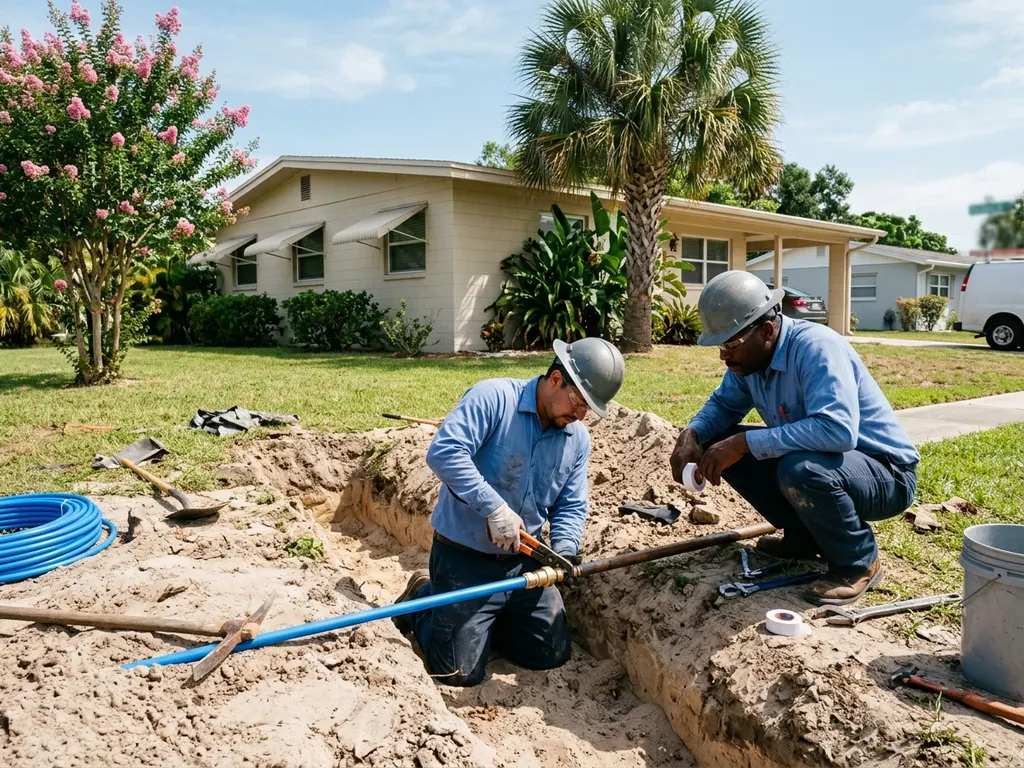
Learn moreTrenchless HDPE section repair preferred — limestone bedrock makes open-trench work expensive. Pipe bursting and HDD on every truck.
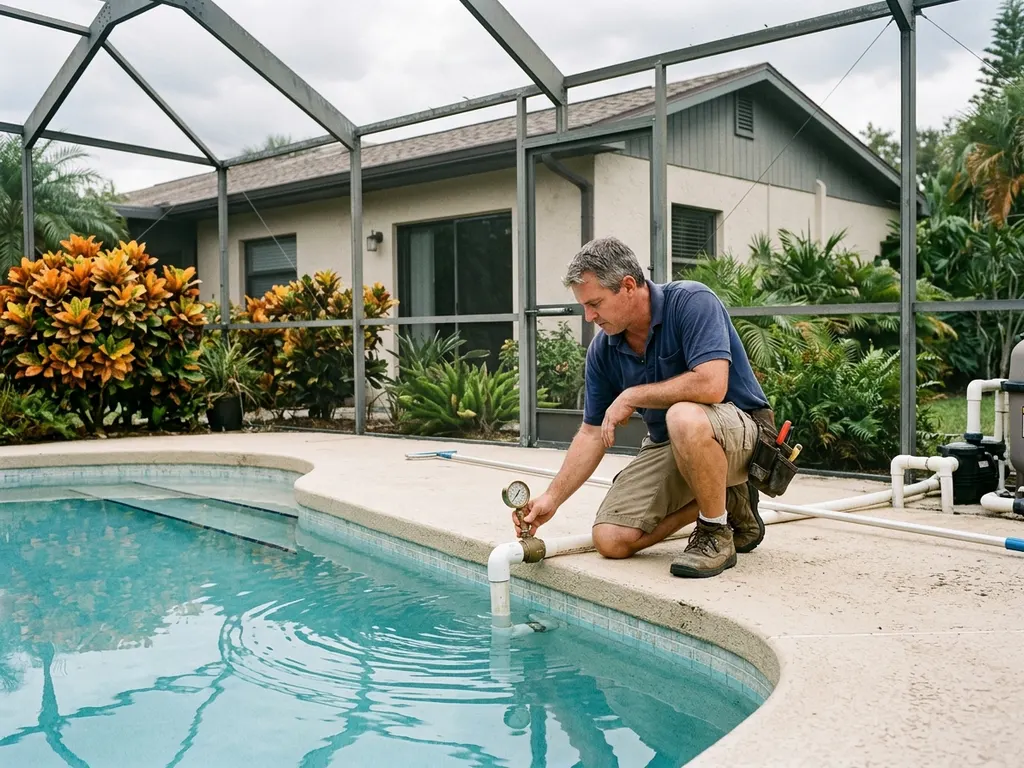
Learn moreLine-by-line pressure testing, underwater fitting reseals and buried-line repair — no draining where it can be avoided.
Learn moreThe Tampa Bay metro has more "geological cause" plumbing failure than anywhere else in Florida. Generalist plumbers from outside the region miss these patterns regularly.
Pasco County (directly north of Tampa) and Hernando County rank among the highest-sinkhole-incidence regions in the U.S. Even when a sinkhole doesn't form, slow ground movement of a quarter-inch per year cracks rigid copper supply lines mechanically. We work the karst zone every day — and we coordinate with geotechnical surveys when a slab leak suggests broader foundation movement.
Tampa Bay Water treats from a mix of groundwater (Floridan Aquifer) and surface water. Hardness ranges 150–300 mg/L as CaCO3 — among the hardest in Florida. Scale builds inside copper, eroding the pipe wall from inside over 20–35 years. Wellwater homes in unincorporated Hillsborough are even harder hit. → Type M copper fails 2x faster here than in soft-water FL regions.
The Carrollwood–Town & Country–Citrus Park belt and Brandon–Riverview suburbs were built primarily 1965–1995 on slab-on-grade construction with copper supply. This is the densest slab-leak grid in Florida — most of these homes are now past design life. → Reroute is the most common recommendation here.
Builders in Hillsborough heavily adopted polybutylene supply pipe between 1980 and 1995, particularly in Bloomingdale, FishHawk-adjacent tracts, and parts of New Tampa. Failure is documented and systematic. Insurance carriers increasingly flag these homes.
A subset of Tampa Bay slab leaks are mechanical rather than corrosive — the pipe is healthy, but ground movement under the slab cracked a rigid copper fitting. These look different on the diagnostic and need different repair approaches. → We confirm with pressure isolation before assuming corrosion vs mechanical.
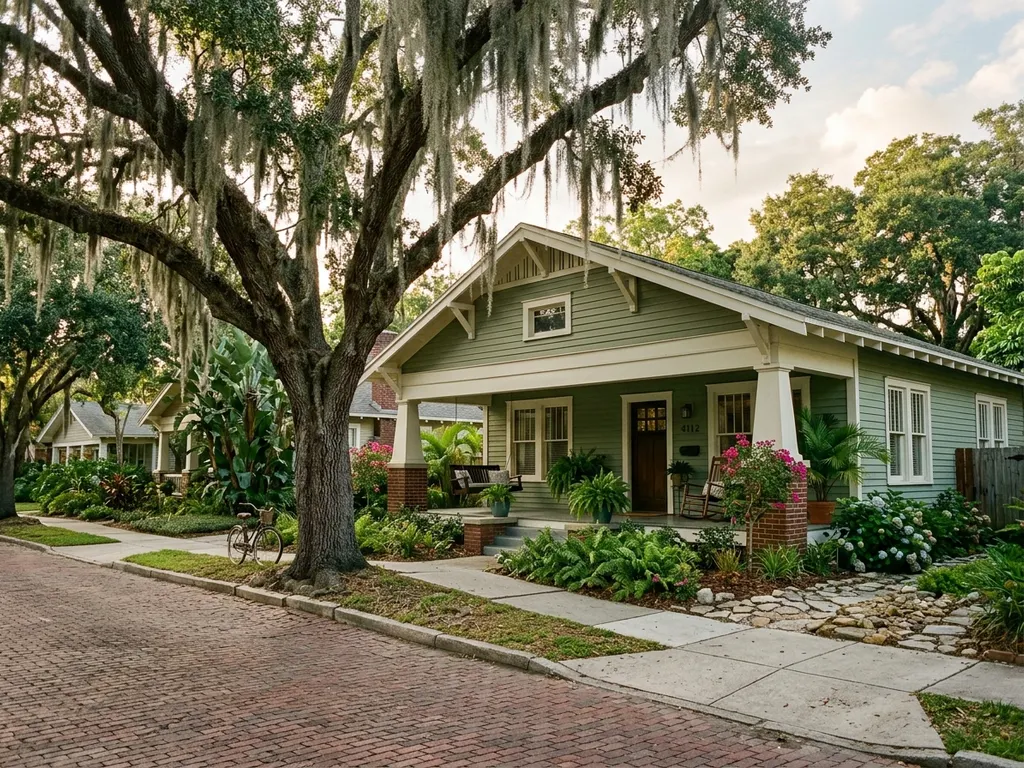
Tampa's housing stock spans 130+ years. Build year predicts pipe material and likely failure mode.
Bungalow-era housing with galvanized steel supply, cast iron drains. Almost universally past life now. Galvanized → end-of-life pipe
Post-war suburban expansion. Slab-on-grade with Type L copper supply. The original tract belt — slab leak failure window is now 5–15 years deep. Highest active call volume. Type L copper → slab leak window
Continued tract growth with mix of Type L copper, Type M copper, and heavy polybutylene adoption. The 1980s polybutylene cluster is concentrated here. CPVC also appears in later sections. Mixed copper + polybutylene
CPVC dominant for tract residential supply. Cream-colored rigid plastic — fails at glued fittings rather than mid-pipe. Failure rate accelerating now as the oldest of these homes cross 25-year mark. CPVC → fitting failures
PEX-A standard for new construction. New downtown condos and mid-rises use commercial-grade systems. Leaks here are typically installer-error fitting failures, not pipe failures. PEX-A · low failure rate
Same-day metro response. Downtown to Brandon to Carrollwood — one regional hub, one specialist.
Tampa Bay Water is the regional wholesaler serving Hillsborough, Pinellas, and Pasco counties. The City of Tampa Water Department delivers to homes inside city limits. Knowing the water chemistry helps predict pipe failure timing.
Tampa Bay tap water typically runs 150–300 mg/L hardness (CaCO3 equivalent) depending on source mix that day. This is "very hard" by WHO classification. It scales pipe walls, accelerates copper interior erosion, and shortens supply line life across the metro.
pH typically 7.5–8.0 — closer to neutral than Miami or Orlando municipal water, slightly more pipe-friendly. Chlorine residual maintained per state requirement. Chloramine treatment in some periods adds copper corrosion potential.
Owns the meter and the pipe up to it. Inside-the-property leaks are homeowner responsibility. Customer service: 813-274-8811 for billing, leak reports, or meter questions.
Unincorporated Hillsborough County areas (Lithia, Plant City fringe, parts of Lutz) often use well water. Well chemistry varies widely — typically harder than municipal. We test pH and hardness on first visit if well-water is suspected.
Three reasons stack: (1) hard water erodes copper from inside faster than soft-water FL regions, (2) the 1965–1995 tract-construction belt covers most of Hillsborough's suburbs and those homes are now solidly past design life, (3) limestone karst geology causes slow ground movement that cracks rigid copper mechanically even when corrosion hasn't reached failure. The combination is uniquely punishing.
If the slab itself shows obvious cracking, settlement, or door-frame distortion in addition to the leak, yes — we coordinate with a geotechnical contractor before repairing. Most Tampa slab leaks are just leaks, not sinkhole-related, but the diagnostic visit includes a quick visual check for foundation-shift indicators. If shift is suspected, we recommend a geotech survey before committing to a repair path.
South Tampa, Hyde Park, Downtown, Channelside, Davis Islands: 45–60 minutes typical. New Tampa, Tampa Palms, Carrollwood, Town & Country: 60–75 minutes. Brandon, Riverview, FishHawk-adjacent: 60–90 minutes. We give real ETAs at dispatch.
Spot repair: $1,500–$3,500 standard. Reroute through walls/attic: $2,500–$5,500. Hillsborough County permit fees included.
We dispatch through hurricane prep windows and resume the moment storm conditions safely allow. Tampa Bay's exposure to Gulf hurricanes means we have an established post-storm response calendar. Post-storm: damage assessment, emergency response prioritized for insurance-documented claims.
We fix the leak and document the cause of loss so your insurance claim approves on the first review.
Call (407) 469-7996Tampa Bay's highest-volume slab leak market gets the most-experienced specialists. Real ETAs at dispatch, written quotes before work, insurance-ready documentation.
Credentials on request before we start
In writing on every completed repair
A person answers — no call center queue
No variation without your sign-off
Figures drawn from our own completed work in Tampa, not national averages.
| Tampa Bay repairs in 24mo | ~840 |
| Slab leak share | 42% |
| Sinkhole-shift failures | 18% |
| Hard-water erosion rate vs FL avg | 2.1x |
| County | Hillsborough County |
Ready to book Leak Repair in Tampa, FL? Call Leak Repair Florida now for fast, licensed dispatch. Leak Repair in Tampa, FL includes upfront pricing with no surprise charges.